What Time Do Polls Close? In the 2020 election, some states took up to two weeks to declare final results. Election day voting has a complex dance of poll closings. They range from 6 p.m. to 1 a.m. Eastern time. Each state reveals its electoral preferences in a carefully choreographed sequence.
Voters across the United States will face different voting hours on this critical election day. The ballot deadlines vary a lot. This creates a dynamic landscape of poll closings that keeps everyone on the edge of their seats.
Election day is more than just casting a vote. It’s a nationwide moment of democratic participation. Understanding voting hours is key for voters wanting to track real-time results. Some states close polls as early as 6 p.m. Eastern time. Others won’t shut down until midnight.
This variation means voters need to stay informed about their specific state’s timeline. It’s important to know when polls close in your state.
Key Takeaways
- Polls close between 6 p.m. Tuesday and 1 a.m. Wednesday Eastern time
- Swing state polls are most critical between 7 p.m. and 10 p.m. Eastern
- Different states have unique vote-counting procedures
- Early returns might not reflect final election outcomes
- Patience is essential during vote counting process
Understanding Poll Closing Times Across America
The voting timeline on election night is complex. It shows state-by-state poll closings. This creates a changing electoral scene. Knowing these times helps us follow results as they come in.
Polls close at different times across the country. This depends on where you are and local rules. It makes for a thrilling voting timeline.
Early Closing States (6 PM – 7 PM ET)
Some states start early, with polls closing between 6 and 7 PM Eastern Time. These include:
- Indiana
- Kentucky
- Georgia (key swing state)
Mid-Evening Closings (7 PM – 9 PM ET)
Many states close polls in the mid-evening. This brings a flood of election data:
- North Carolina at 7:30 PM
- Ohio at 7:30 PM
- Michigan at 8 PM
- Pennsylvania at 8 PM
Late Night Closings (9 PM – 1 AM ET)
Western states keep the excitement going with late closings:
| State | Poll Closing Time |
|---|---|
| Arizona | 9 PM ET |
| Wisconsin | 9 PM ET |
| Nevada | 10 PM ET |
| Hawaii | 11 PM ET |
| Alaska | 1 AM ET |
The staggered closings make for an election night schedule full of suspense. Each time zone adds its own piece to the puzzle.
What Time Do Polls Close in Swing States
The battleground states are key in the presidential election. Their poll closing times are very important. Each state’s voting deadline can change the election story.
- Georgia: Polls close at 7:00 PM ET, starting the evening’s results
- North Carolina: Voting ends at 7:30 PM ET, showing early trends
- Pennsylvania and Michigan: Polls close at 8:00 PM ET, big for the electoral college
- Arizona and Wisconsin: Voting concludes at 9:00 PM ET, with big swing state chances
- Nevada: The last swing state, polls close at 10:00 PM ET
Knowing these voting times helps predict election results. The exact time is key because states report results at different speeds.
| Swing State | Poll Closing Time | Electoral College Votes |
|---|---|---|
| Pennsylvania | 8:00 PM ET | 19 |
| Georgia | 7:00 PM ET | 16 |
| North Carolina | 7:30 PM ET | 16 |
| Michigan | 8:00 PM ET | 15 |
| Arizona | 9:00 PM ET | 11 |
Election night changes fast as these states report. Each poll closing time could be a big moment in the election.
Critical Time Zones and Voting Hours
Knowing about time zone differences is key for understanding voting across the United States. The country has many time zones. This makes election day reporting and voting tricky.
Polling times and voting schedules change a lot in different places. This affects how people vote and take part in elections.
Eastern Time Zone Polling Hours
States in the Eastern Time Zone usually have the same voting schedule:
- Polls open at 7 a.m. local time
- Most places close polls between 7 p.m. and 8 p.m. ET
- If you’re in line at closing time, you can still vote
Central and Mountain Time Considerations
Time zone differences make voting harder in some places:
- Central Time states close polls at 8 p.m. local time
- Mountain Time zones might close later
- Early results can affect voter turnout in western states
Pacific Time Zone Impact
West Coast states have their own voting rules:
- California and other Pacific Time Zone states close polls later
- Nevada polls close at 10 p.m. ET
- Time zone differences can slow down election result reports
The different polling hours show how complex national elections are. Each time zone plays a part in the democratic process.
Early Voting and Mail-in Ballot Deadlines
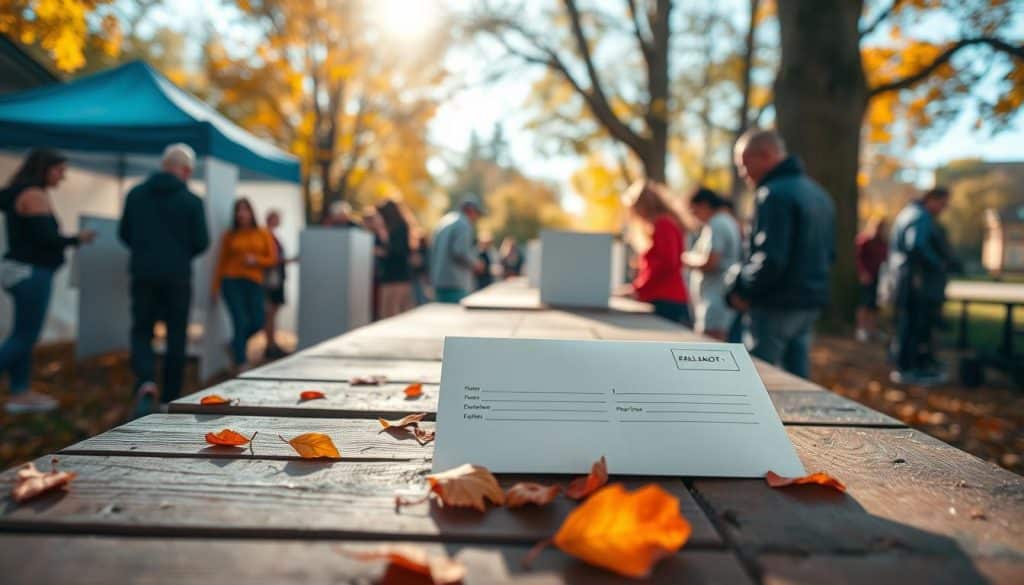
Voting in the United States has changed a lot. Now, people can vote early or by mail. This is different from voting in person.
Every state has its own rules for early voting. Knowing these rules helps voters plan how to vote.
- Mail ballot application deadlines are 7-14 days before Election Day
- Most states need ballots by 8:00 p.m. on Election Day
- There are special voting options for emergencies
In Pennsylvania, voting by mail is easy. You don’t need a reason to ask for a mail ballot. Voters must apply by October 29th and get their ballots back by 8:00 p.m. on Election Day.
| State | Mail Ballot Application Deadline | Ballot Receipt Deadline |
|---|---|---|
| Pennsylvania | October 29, 2024 | 8:00 p.m. on Election Day |
| Arizona | One week before Election Day | 8:00 p.m. on Election Day |
| Nevada | Five days before Election Day | 7:00 p.m. on Election Day |
Voters can check their ballot status online. They can also get emails about their ballots. If you haven’t sent in your ballot, you can still vote in person.
Key Battleground States Timeline
The presidential race shows its strength in swing states. These states can change the number of electoral votes. Each state has its own voting times, making election night thrilling.
Georgia and North Carolina: Early Evening Insights
Georgia and North Carolina give us our first look at swing state results. They close polls early, showing us what voters might choose:
- Georgia polls close at 7:00 PM EST
- North Carolina polls close at 7:30 PM EST
- Biden won Georgia in 2020 by just 11,779 votes
- North Carolina was Trump’s closest win in 2020
Pennsylvania and Michigan: Critical Blue Wall States
Pennsylvania and Michigan are key for the presidential race. They have big voter numbers and are crucial battlegrounds:
- Pennsylvania polls close at 8:00 PM EST
- Michigan polls close at 8:00 PM EST
- Biden took these states back in 2020 after 2016
- Pennsylvania has 19 important electoral votes
Arizona and Nevada: Western Swing State Dynamics
Arizona and Nevada are important in the west. They close polls later but are key to understanding the election:
- Arizona polls close at 9:00 PM EST
- Nevada polls close at 10:00 PM EST
- Arizona was won by Biden in 2020 by just 0.3 percent
- Nevada has correctly predicted the winner in 27 out of 30 elections
Result Reporting Process and Timeline
Election night reporting is a detailed process. It goes beyond just counting votes. The results shared on election night are preliminary and need many checks.

- Initial Election Night Reporting
- Preliminary Result Verification
- Official Result Certification
- Post-Election Audits
Most states do thorough checks after the election. Local offices are key in these checks. The deadline for certification varies by place.
| Reporting Stage | Timeline | Key Actions |
|---|---|---|
| Election Night | 8:45 PM – 11:00 PM | Preliminary Results Released |
| Post-Election | Next 30 Days | Official Result Certification |
| Final Verification | By December 5 | Complete Result Verification |
Recounts can start in different ways. This includes requests from candidates, petitions from voters, or when margins are close. The aim is to give clear, accurate election results. This is done while keeping high standards of verification.
Factors Affecting Vote Counting Speed
Election night vote tabulation is complex. It’s influenced by many factors. The speed of counting ballots varies a lot between states.
Vote counting involves detailed steps. These steps can cause delays in election results. Each state has its own way of handling ballots and counting votes.
Mail Ballot Processing Rules
Mail ballot processing is a big challenge. Important things to consider are:
- 43 states let election workers start processing mail ballots early
- This early start helps count votes faster
- But, some states have strict rules on when to start processing
State-Specific Counting Procedures
States use different methods for counting votes. For example:
| State | Mail Ballot Processing | Result Reporting Speed |
|---|---|---|
| Detroit, Michigan | Pre-processes mail ballots | 80% of results by 10:30 p.m. |
| Maricopa County, Arizona | Early ballot drop-offs | Nearly 20% of votes on Election Day |
| North Carolina | New legal restrictions | Up to 1-hour result delay |
Population Density Impact
Population density affects how fast ballots are counted. Cities like Milwaukee face more challenges. They have more voters and ballots.
Election night reporting needs advanced systems. Over 4,000 vote count reporters and nearly 1,000 vote entry clerks work hard. They aim for quick and accurate results.
Understanding Early Results vs Final Tallies

Election night shifts can be confusing. The first results might not show the real winner. This is because of different voting ways and how votes are reported.
Red mirage and blue shift have changed election stories before. In 2024, these might not be as big because of voting changes.
- Mail ballot requests have decreased compared to 2020
- Some states have implemented faster ballot processing methods
- New laws are streamlining election result reporting
Things that make results more accurate include:
- Mail ballot counting procedures
- State-specific verification processes
- Geographic distribution of votes
States like Georgia, Pennsylvania, and Arizona might see more changes. Protect Democracy says fewer mail ballots could mean faster results in 2024.
It’s important to know that early results might not be final. The official results could take days or even weeks. This shows why we need to be patient during elections.
State-by-State Results Timeline
Every state has its own way of counting votes. This means results come out at different times. Each state’s laws affect how fast we get the final numbers.
State timelines can be hard to guess. Here are some interesting facts about result reporting:
- Arizona has long waits, with polls closing at 9 p.m. EST and results taking days
- Pennsylvania has strict rules that make counting slower
- Nevada needs a few days to count all votes
Several things affect how fast results come in:
- How states handle mail-in ballots
- State laws about elections
- Local tech and infrastructure
- How many people live in the area
States like Georgia and Michigan have complex counting processes. In 2020, Georgia took almost two weeks to confirm the presidential election results. This shows how hard vote counting can be.
Don’t expect results right away. States focus on making sure every vote is counted right, even if it takes longer.
Changes in Election Night Reporting for 2024
The 2024 election is changing how we see results. State governments are making big updates. They want to make voting faster, more accurate, and clear for everyone.
New State Laws and Procedures
Many states are making voting easier. For example, North Carolina has new rules. They say when and how to report early voting results.
- County boards must wait until 7:30 p.m. to report in-person early voting results
- Early voting result reporting can take 30-60 minutes
- Absentee-by-mail ballots can be tabulated before polls close
Technology and Reporting Updates
New tech is making voting better. States are using advanced systems. These systems help count votes fast and accurately.
- Accelerate ballot counting processes
- Enhance data accuracy
- Provide real-time tracking of election results
Security Measures and Verification Steps
Keeping elections safe is very important. New steps are being taken. These steps check ballots and track votes. They make sure results are right and people trust the vote.
| State | Early Voting Participation | Reporting Changes |
|---|---|---|
| North Carolina | Over 50% in some counties | 7:30 p.m. reporting deadline |
| Guilford County | 18,000+ early voters | Delayed result reporting |
| Forsyth County | 50%+ registered voters | Enhanced verification |
Conclusion
The 2024 election shows how strong voter participation is in the United States. Over 85 million voters have cast early ballots. Forty-seven states offer early voting, making it easier for people to vote.
Election integrity is key in this big effort. Even though voting rules and times differ, everyone is working towards the same goal. Whether by mail or at polling stations, every vote matters.
Counting votes carefully is vital for a fair election. Early results might change, but the wait shows how important each vote is. It’s important to know your state’s voting rules and stay involved.
This election shows the power of democracy in action. Every vote is a voice, a choice, and a promise to our nation’s values.